Why did blood and water come out of Jesus' side?
CW: pain, torture, descriptions of physical suffering, crucifixion
"One of the soldiers pierced his side with a spear, and immediately blood and water flowed out." —John 19:34 (NLT)
This is an interesting detail about Jesus' crucifixion that is only included in John's gospel account (John 19:34). For centuries, biblical scholars have wondered why John included this note about blood and water in his account of the crucifixion. Some have wondered if it truly happened or if it was a reference of spiritual significance.
The Process of Crucifixion
Victims of crucifixion, left on their own to die, sometimes continued to hang on the cross for days—doomed to a slow and painful death.
In order to exhale, they would have to push up on their wounded feet. To inhale, they'd put their weight on their pierced hands instead to open their lungs.1 This tortuous process would repeat over and over as they breathed.
Eventually, sheer exhaustion would overtake them, and they wouldn't have energy to breathe anymore, thus ending their lives in asphyxiation.2
Jewish Laws About Crucifixion
"You must bury the body that same day, for anyone who is hung is cursed in the sight of God. In this way, you will prevent the defilement of the land the Lord your God is giving you as your special possession." —Deuteronomy 21:23 (NLT)
Jewish law commanded that a person who was punished by hanging should not be left there overnight (Deuteronomy 21:22-23). Since the day Jesus was crucified was the Day of Preparation for Passover (a holy day) and it was approaching the Sabbath (John 19:14), the Jewish religious leaders were especially anxious to observe this command concerning Jesus and the two thieves. No one wanted to be caught working on the Sabbath.
The Hastening of Death
"They asked Pilate to hasten their deaths by ordering that their legs be broken. Then their bodies could be taken down." —John 19:31 (NLT)
When the Jews asked Pilate to order the crucified men's legs to be broken, they were actually asking to hurry up their deaths. With broken legs, they wouldn't be able to push up anymore to exhale and would then asphyxiate and die. Then their bodies could be taken down so they would not remain on the cross on the Sabbath (John 19:31).
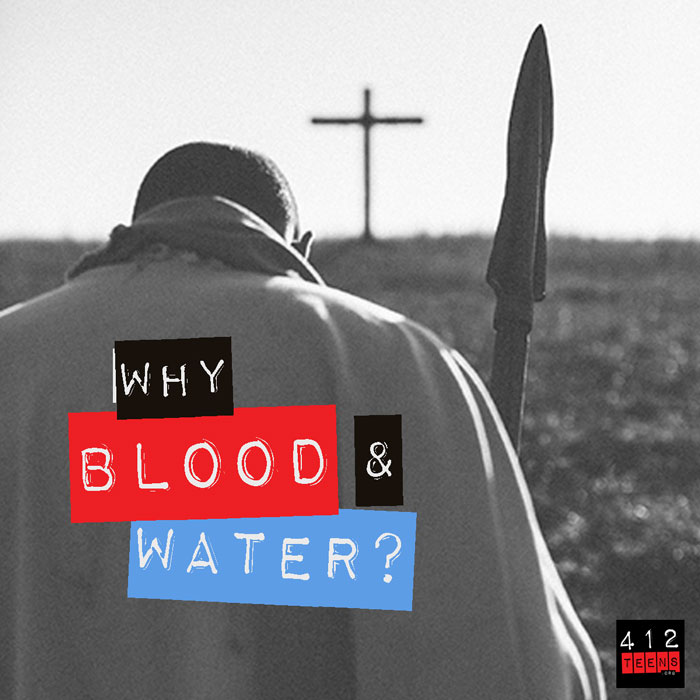
After the Roman soldiers broke the legs of the two criminals, they saw that Jesus was already dead, so they didn't break His legs (John 19:32-33). Instead, one of the soldiers pierced His side with a spear—just to be sure He really was dead—and blood and water spilled from the wound (John 19:34).
Science Explains the Blood & Water
"'Father, I entrust my spirit into your hands!' And with those words [Jesus] breathed his last." —Luke 23:46 (NLT)
Biblical scholars of today are now armed with the knowledge of medical advancements and discoveries in scientific research. Today, John's addition of this detail is perfectly clear: it's undeniable proof of Jesus' death.
In medical terms, Jesus died of cardiac arrest.3 We now know that John was observing the results of what's called pleural effusion, a condition where water accumulates in the lungs. This would have happened to Jesus based on the type of traumatic death He was experiencing.4Blood and water flowing out of a victim's pierced side is exactly what one would expect to see of a person who dies of this nature.
Biblical Prophecies Fulfilled
"I will pour out a spirit of grace and prayer on the family of David and on the people of Jerusalem. They will look on me whom they have pierced and mourn for him as for an only son. They will grieve bitterly for him as for a firstborn son who has died." —Zechariah 12:10 (NLT)
John goes on to state that the fact that Jesus' legs were not broken and His side was pierced was no accident (John 19:36-37). Although the Roman soldiers didn't realize they were fulfilling biblical prophecy that was given hundreds of years before that day, their actions carried out the prophecy that "not one of his bones will be broken" (Psalm 34:20).
Old Testament Scriptures like Exodus 12:46 (about the Passover lamb which was a picture of Christ) and the prophecy in Zechariah 12:10 about looking upon "him whom they have pierced" were also fulfilled that day.
John wrote this testimony about Jesus so that every person would know that Jesus truly died on the cross for our sins and then rose again (John 19:35; 1 Corinthians 15:3-5). Have you accepted Jesus as your Savior from the punishment of sin? If not, can we tell you more about salvation?
REFERENCES: 1. Strobel, Lee. The Case for Christ: A Journalist's Personal Investigation of the Evidence for Jesus. Zondervan Publishing House, 1998, p. 265. 2. Strobel p. 265. 3. Strobel p.266. 4. Wallace, J. Warner. Alive: A Cold-Case Approach to the Resurrection. David C. Cook, 2014, p. 23-24.
ALSO SEE:
- Who is Jesus?
- Does the Old Testament predict the coming of Jesus?
- Did Jesus really die?
- Did Jesus go to Hell between His death and resurrection?
- What does it mean that Jesus is the Lamb of God?
- What is Good Friday?
- On what day of the week was Jesus crucified?
- Where was Jesus crucified?
- What are the last seven sayings of Christ?
- Is Jesus' resurrection really true?
- Why is the resurrection important?


TL;DR
The account of blood and water flowing out of Jesus' side when pierced by the Roman soldier after His death is only recorded in the gospel of John. Some have wondered why John included this in his account and thought it only held spiritual significance. With today's medical knowledge, we now know that John was observing the real results of pleural effusion, a condition where water accumulates in the lungs. Both blood and water would have flowed from Jesus' side when pierced, based on the type of traumatic death He was experiencing. John recorded this eyewitness testimony as an emphatic statement that Jesus truly died on the cross for our sins and then rose again (John 19:35; 1 Corinthians 15:3-5).

Writer: Hanna S.
Hanna loves spending time with kids and teens. She enjoys being detectives with them to investigate God's Word to discover truths to answer any questions. She is the co-author of a newly published apologetics curriculum for children and teaches one online for highschoolers-adults. To learn more about her ministry you can visit networkerstec.com. For fun, she likes to play Ultimate Frisbee, read historical fiction, and paint.
