Why did Jesus heal on the Sabbath?
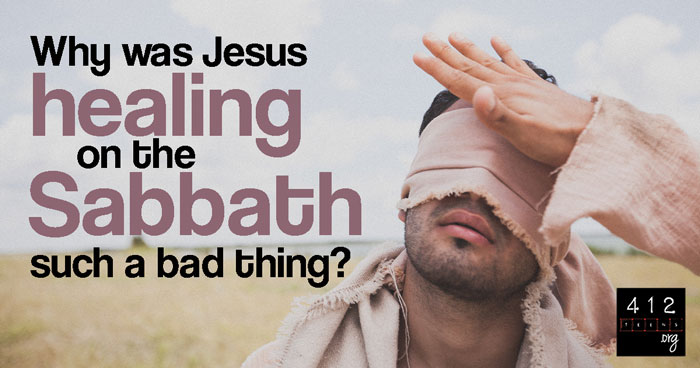
"News about [Jesus] spread as far as Syria, and people soon began bringing to him all who were sick. And whatever their sickness or disease, or if they were demon possessed or epileptic or paralyzed—he healed them all." —Matthew 4:24 (NLT)
Jesus was known to the people of His day as a teacher who healed people (Matthew 4:24). Several times, He healed on the day of the Sabbath:
- Simon Peter’s mother-in-law (Mark 1:29-31)
- a man with a withered hand (Mark 3:1-6)
- a man born blind (John 9:1-16)
- a disabled woman (Luke 13:10-17)
- a man with severe edema (Luke 14:1-6)
- a demon-possessed man (Mark 1:21-28)
- a paralyzed man (John 5:1-18)
The Pharisees' "Problem"
"Remember the Sabbath day, to keep it holy." —Exodus 20:8
People need help when they need it, and Jesus was there to help them—for need knows no calendar. However, the religious leaders of the day, especially the Pharisees, were upset with Jesus for healing on the Sabbath (Matthew 12:10; Mark 3:2, John 5:14; 9:14-16). They saw Jesus' healing miracles as "work" and a violation of their strict, legalistic rule of "no work on the Sabbath" (Mark 3:1-5).
Also, something the Pharisees seemed to have forgotten was that the Sabbath was originally God’s command. He gave the Israelites the Ten Commandments, the fourth of which was to observe a rest day once a week and do no work (Exodus 20:8-10). Because this was God's command, it is up to HIM to define the terms, but the religious leaders decided to make that determination themselves.
The Sabbath & the Israelites
"You must observe my Sabbaths. This will be a sign between me and you for the generations to come." —Exodus 31:13
The observance of the Sabbath is a reflection of God's choice to stop working after six days of creation (Genesis 2:1-3). Sabbath observance was the most public way in which Israel was distinguished from other nations (Deuteronomy 14:2). Because God wanted them to take their covenant with Him seriously, He did not tolerate law-breakers among His people. Israelites who treated the Sabbath like any other day were subject to the death penalty (Exodus 31:12-17; Numbers 15:33-36).
The Sabbath & the Pharisees
"The Pharisees asked Jesus, 'Does the law permit a person to work by healing on the Sabbath?' (They were hoping he would say yes, so they could bring charges against him.)" —Matthew 12:10 (NLT)
As time went on, religious leaders decided to interpret God's commands for themselves and added a bunch of additional stipulations and addendums people would be required to follow. Over the years, more and more rules were added to God's original law. By Jesus’ day, it was quite severe.
The Talmud lists 39 types of work forbidden on the Sabbath, amounting to hundreds of laws (Mishnah Shabbat 7.1). It was easy to mess up within the Pharisees’ strict regulations, and the restrictions they added became burdens to the Jews. They believed that God had made the Sabbath so that they could prove to God how faithful they were to Him. But Jesus was about to tell them that the opposite was true.
When Jesus healed on the Sabbath, He expressed God’s goodness and power. And, in the process, He explained exactly what the Sabbath was about (Mark 2:27; Mark 3:4).
Jesus Shuts Down Unlawful Traditions
"[Jesus] turned to his critics and asked, 'Does the law permit good deeds on the Sabbath, or is it a day for doing evil? Is this a day to save life or to destroy it?' But they wouldn't answer him." —Mark 3:4 (NLT)
Jesus was not breaking God’s law by healing on the Sabbath (Matthew 5:17). Rather, as He points out, the good He was doing was in line with the intention of God's command (Mark 3:4).
Still, the Pharisees would have none of it. They were angry—murderously so. Not only was their tradition broken, but Jesus had silenced them in front of the crowd. So embarassing. Even worse, Jesus, whom they considered a sinner, was garnering fame and the love of the people because the "work" He had done was truly miraculous.
Jesus Defines the Sabbath
"The Sabbath was made to meet the needs of people, and not people to meet the requirements of the Sabbath." —Mark 2:27 (NLT)
Earlier, Jesus explained the heart behind the Sabbath to the religious leaders (Mark 2:27). God gave a day of rest to humanity so they would step back from their daily toil to rest and enjoy the creation of God. Later, the Sabbath law was given to Israel as part of their covenant with God. Even then, keeping the Sabbath was to be beneficial. The Sabbath was never meant as a means of attaining righteousness or further burdening the people of God.
Jesus also proclaimed His authority over the Pharisees’ regulations, calling Himself "Lord of the Sabbath" (Mark 2:28). As Lord of the Sabbath, He could allow what they disallowed, and He could disallow what they allowed. As long as Jesus respected the Mosaic Law Himself, there was no way they could accuse Him. Jesus is not a rule-breaker; He is the Rule-maker. Ultimately, our true rest can only be found in Jesus.
"Come to me, all of you who are weary and carry heavy burdens, and I will give you rest. Take my yoke upon you. Let me teach you, because I am humble and gentle at heart, and you will find rest for your souls. For my yoke is easy to bear, and the burden I give you is light." —Matthew 11:28-30
ALSO SEE:
- Are Christians required to observe the Sabbath?
- Who is Jesus Christ?
- What does it mean that Jesus is the Son of God?
- What is the spiritual gift of healing?
- Did the miracles in the Bible really happen?
- What is the spiritual gift of miracles?
- What's the difference between miracles and magic?
- What is the Sabbath?
- How can we know which parts of the Bible apply to us today?


TL;DR
Jesus was not breaking God's law by healing on the Sabbath (Matthew 5:17). Rather, as He points out, the good He was doing was in line with the intention of God's command (Mark 3:4). The Sabbath was never meant as a means of attaining righteousness or further burdening the people of God. But the Pharisees disagreed enough to feed their murderous intentions.
