Why did Jesus have to die?
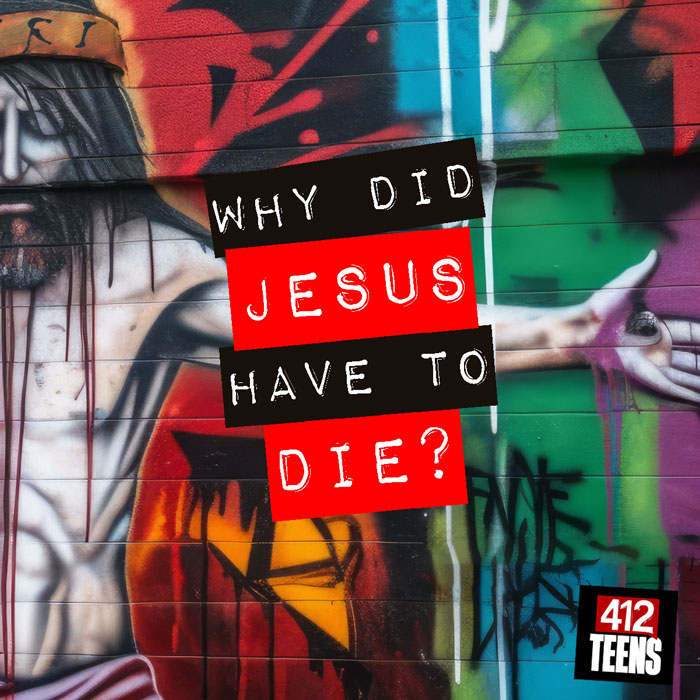
"[Jesus] personally carried our sins in his body on the cross so that we can be dead to sin and live for what is right. By his wounds you are healed." —1 Peter 2:24 (NLT)
Why couldn't God have come up with another way to forgive us that didn't involve a horrific death? Or could God have sacrificed an angel instead of His Son? When we ask questions like this, we need to be sure we aren't questioning God's will. His ways are higher than ours, and He ultimately knows what's best (Isaiah 55:8).
Jesus died on the cross to pay for our sins so that we can have a restored relationship with God and be able to experience eternal life with Him (1 Peter 2:24). Then He came back to life three days later to conquer death and sin (1 Corinthians 15:16). And God did all of this for an undeserving people because of how much He loves us (John 3:16-17; Romans 5:8)!
The Penalty for Sin
"For the wages of sin is death, but the free gift of God is eternal life through Christ Jesus our Lord." —Romans 6:23 (NLT)
The Bible tells us that when we wrong another person, the repayment necessary typically has to be equal to or greater than the initial infraction (Exodus 21:24; Leviticus 24:20). When it comes to the price for breaking God's law (sin), the penalty is death (Romans 6:23).
Sin separates us from God because He is holy and perfect, and sin cannot exist in His presence. Our spiritual death is eternal separation from God, commonly described as hell (Romans 5:12). In order to have a restored relationship with Him, our sins must be paid for with a sacrificial death.

Why sacrifice a life?
"According to the law of Moses, nearly everything was purified with blood. For without the shedding of blood, there is no forgiveness." —Hebrews 9:22 (NLT)
In the Old Testament, we learn about how God's people were commanded to sacrifice animals to pay the penalty for the sins of the people. God wanted to forgive His people, and a penalty had to be paid. The animal served as a substitute, dying in place of the sinner, but the forgiveness was only temporary.
See, these animal sacrifices didn't pay for their sins permanently, so the offering had to be done regularly (Leviticus 4:27, 32-35). This system would later help people understand the significance of the ultimate, perfect, and final sacrifice that was to come—Jesus' sacrifice on the cross (Hebrews 9:24-26; Hebrews 10:1-4).
Why did it have to be Jesus?
"God made Christ, who never sinned, to be the offering for our sin, so that we could be made right with God through Christ." —2 Corinthians 5:21 (NLT)
What made Jesus the perfect One to die for our sins? Why couldn't God have used someone else—like a powerful political figure or even an angel? Because a powerful, divine source was necessary so that the scope of the sacrifice would be infinite—across the past, present, and future. Because Jesus is a singularly unique being like no other, He was perfectly equipped to do His work on the cross.
How was He unique? Jesus has two essential natures: one human and one divine. Theologians call this concept the "hypostatic union"—hypostatic refers to personhood, union refers to these two natures coexisting.
1. Fully Human
We know that Jesus is human because He had a physicality at the moment of His conception (Luke 1:35). His human mother gave birth to Him (Luke 2:6-7), then He grew up from a child to a teenager to a man (Luke 2:40, 52). Jesus experienced everything humans do—such as hunger (Matthew 4:2), thirst (John 19:28), and being tired (John 4:6). He even faced temptations—just like humans do—yet He never gave in to sin (Hebrews 4:15).
2. Fully God
The beginning of the book of John says that Jesus existed before the days of Creation and that He became flesh and walked among us (John 1:1, 14). Jesus affirmed His equality with God Himself too (John 8:58; John 10:30). Additional passages throughout the Bible demonstrate Jesus' divinity and unity with God (Philippians 2:6, Colossians 2:9, Titus 2:13, and many more!). Since Jesus is God, He could never sin, making Him the only human who was ever 100% innocent.

Jesus Stands in for Humanity
"He was pierced for our rebellion, crushed for our sins. He was beaten so we could be whole. He was whipped so we could be healed." —Isaiah 53:5 (NLT)
Humans are the ones who needed to be saved from eternal punishment, so the final sacrifice had to be made by a human. Not just any human though—but a perfect, innocent human (Galatians 4:4-5). Even animal sacrifices had to be perfect—free from any defect, blemish, or sickness (Leviticus 22:20).
A natural human being would never be righteous enough to live up to God's standard of holiness (Romans 3:23; Matthew 5:48). That's why the penalty for humanity's sin couldn't be permanently paid by the death of an animal, an angel, or just any person.

Jesus: Our Representative & High Priest
The Bible calls Jesus our representative because He took on a fragile human form and gave up His divine privileges to be obedient to God's will (John 3:16; Philippians 2:5-8). He's also called our high priest (Hebrews 4:14-15)—like the Old Testament priests who made animal sacrifices on behalf of the people for their sins (Leviticus 16:32-33).
One major difference between Jesus and the priests is that Jesus never needed to pay for His own sins because He had no sins to be forgiven for (Hebrews 7:26-28). So the reconciliation He gave us was as selfless as could possibly be (John 15:13). His sacrifice was sufficient atonement for each and every sin of every person who ever lived or will ever exist—past, present, and future!
A New Covenant
"With [Jesus'] own blood—not the blood of goats and calves—he entered the Most Holy Place once for all time and secured our redemption forever." —Hebrews 9:12 (NLT)
Because Jesus is both human and divine, He can speak for all humanity and return us to righteousness before God. Because Jesus bridged the gap between our sinful selves and our holy God (1 Timothy 2:5; Hebrews 8:6), life sacrifices are no longer needed to restore our relationship with our Creator. The Old Covenant between God and His people has been replaced by a New Covenant—a promise that He will forgive those who believe in His Son (John 3:16-17; Luke 22:20; Ephesians 2:8-9).
"[Jesus] is the one who mediates a new covenant between God and people, so that all who are called can receive the eternal inheritance God has promised them. For Christ died to set them free from the penalty of the sins they had committed under that first covenant." —Hebrews 9:15 (NLT)
ALSO SEE:


TL;DR
God requires a life sacrifice as atonement for sin since the penalty of sin is death (Romans 6:23). Because a powerful, divine source was necessary so that the scope of the sacrifice would be infinite—across the past, present, and future—there is only one person who could do this. Because Jesus is both human and divine, He can speak for all humanity and return us to righteousness before God. Because Jesus bridged the gap between our sinful selves and our holy God (1 Timothy 2:5; Hebrews 8:6), life sacrifices are no longer needed to restore our relationship with our Creator. The Old Covenant between God and His people has been replaced by a New Covenant—a promise that He will forgive those who believe in His Son (John 3:16-17; Luke 22:20; Ephesians 2:8-9).

Writer: Andrew Stout
Andrew Stout is a young adult who converted to Christianity at age 15 in 2021. In addition to writing articles, he is a member and moderator of the 412teens Discord server and makes short form videos for the 412teens social media channels. His hobbies include hiking, making videos, and discussing theology.
