What does the Bible say about depression?
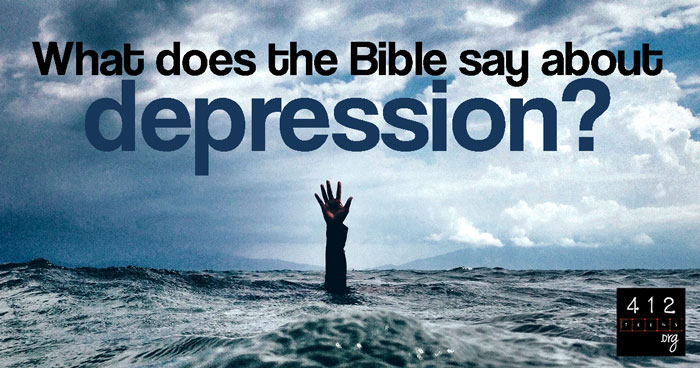
[CW: depression, suicide, trauma, abuse]
"Come to me, all of you who are weary and carry heavy burdens, and I will give you rest." —Matthew 11:28 (NLT)
Depression is a loaded word that carries a variety of meanings. Many people incorrectly use the term "depression" interchangeably with temporary feelings of sadness. Like saying, "I was super depressed that we lost the game this week! I guess there’s always next week." That's not what we're talking about here.
Clinical Depression is Different
Clinical depression is a condition that can really only be determined by a health care professional. Among other symptoms, clinical depression involves feelings of sadness and hopelessness that persist for a minimum of two weeks, as determined by the American Psychiatric Association. Sometimes, regardless of the reasons, depression may be accompanied by severe anxiety, self-harm, or suicidal ideation.
Godly Joy & Depression
"Always be full of joy in the Lord. I say it again—rejoice!" —Philippians 4:4 (NLT)
As Christians, we're often reminded by our communities to "rejoice in the Lord" (Philippians 4:4) no matter what. Even in times of hardship, the Bible talks about being joyful (James 1:2-4). But how does godly joy factor in for the sufferer of depression? Is being depressed the same as being disobedient to commandments of joy?
There can be a lot of confusion within the Christian community about mental illness. A Christian who suffers from depression is NOT sinning—even as they struggle desperately to find a biblical way to cope. And while it may not be every day, a person struggling with depression can still have days when they're able to embrace godly joy in the midst of their suffering.
One of the beautiful things about the Bible is that it’s not a mechanical rulebook—yelling at us when we've messed up or kicking us when we're down. It's a collection of stories that speak of real human beings just living and growing then failing and recovering. Many of the stories we find celebrate redemption and God's grace for humanity's imperfections.
Depression in the Bible
Many believers throughout church history have suffered from depression, such as Martin Luther and Charles Spurgeon. And while we won't find the term "clinical depression" in the Bible, there are many examples of people who suffered from symptoms that match the definition of clinical depression.
Causes of Depression
Depression has no "blanket" cause or effect, nor are there any guarantees about "getting better." Some of the people we read about in the Bible suffered from depression brought upon by traumatic circumstances, others by spiritual oppression, and yet others may have had chemical imbalances in the brain that had yet been discovered.
Suicidal Ideation
"If this is how you intend to treat me, just go ahead and kill me. Do me a favor and spare me this misery!" —Numbers 11:15 (NLT)
Both Moses (Numbers 11:15) and Elijah (1 Kings 19:3–5), two of our "heroes" of the faith, cried out to God that they would rather die than live. God didn't rebuke them for having suicidal thoughts. Having thoughts of wanting to die doesn't mean you're doomed. God offered His deep love and supernatural provision to these men, and He offers healing and a future to you too.
God Does Not Condemn Depression Sufferers
The Bible doesn’t condemn mental health issues, but it does hold us accountable to making wise choices to take care of ourselves. Our bodies are temples of the Holy Spirit (1 Corinthians 6:19), and that's a vivid reminder to care for the body God gave us. But as often is the case with a depression sufferer, sometimes they simply can’t take care of themselves—not alone anyway. That's when it's time to seek help.
Is depression a sin?
"Get all the advice and instruction you can, so you will be wise the rest of your life." —Proverbs 19:20 (NLT)
If you suffer from depression, please understand that your depression does NOT automatically mean you have a weak faith or that you've done something wrong or that God is punishing you for nothing. While God doesn’t promise to heal us of clinical depression completely, He does promise to provide wisdom (James 1:5), presence (Hebrews 13:5), and strength (Philippians 4:13).
There's nothing sinful about being sad or discouraged about your life or circumstances. These struggles are sometimes a part of living as a human in a broken world (Romans 8:20-22; Genesis 3:14-19). We all get upset and frustrated about life from time to time.
There's also nothing sinful about being born with or developing a chemical imbalance in your brain. There's nothing sinful about some of your body parts—like your brain—not functioning as they were intended to. Regardless of the cause of depression, there is help available.
How can a Christian overcome depression?
"Brothers and sisters, we urge you to warn those who are lazy. Encourage those who are timid. Take tender care of those who are weak. Be patient with everyone." —1 Thessalonians 5:14 (NLT)
The apostle Paul says to encourage those who suffer and treat them with kindness and patience. While he goes on to remind us to embrace joy, he treats all emotional struggles with a balm of compassion. Paul realizes that the pursuit of joy may present different obstacles for different people.
God has allowed medical science to advance such that we now have skilled doctors to provide wisdom and diagnosis for our mental health. If you're suffering from depression or any other mental illness, there's no shame in seeking medical assistance.
Sometimes, one suffering from depression might need medication to help the brain heal or supplement a chemical they're not making correctly. It's OK to need spiritual mentors and mental health doctors, counselors, and psychologists.
Please Seek Help
"Don't worry about anything; instead, pray about everything. Tell God what you need, and thank him for all he has done." —Philippians 4:6 (NLT)
If you believe you or a loved one is struggling with depression, please seek help right away—or encourage your friend to seek help. Talk to God (Philippians 4:6). Talk to others. Talk to your parents (or your loved one's parents)—especially if suicidal thoughts are a factor.
Seek counseling and the wisdom of doctors if you can. There's always something to hope for (John 10:10). God is listening, and He's always willing to give us exactly what we need.
ALSO SEE:
- Is it wrong for a Christian to be depressed?
- What does the Bible say about sadness?
- How should a Christian deal with Seasonal Affective Disorder?
- Are coping mechanisms sinful?
- What does the Bible say about recovering from PTSD?
- Should a Christian see a psychologist, psychiatrist, or counselor?
- How do I choose a good Christian counselor?
- Should a Christian take anti-depressants or other mental health medicines?
- How do I survive suicidal thoughts?
- How can I find joy in hard times?
- Is there a difference between joy and happiness?
- Hating Sin Doesn't Mean Hating Yourself


TL;DR
Clinical depression is a condition that can really only be determined by a health care professional. Among other symptoms, clinical depression involves feelings of sadness and hopelessness that persist for a minimum of two weeks, as determined by the American Psychiatric Association. We won't find the term “clinical depression” in the Bible, but there are many examples of people who suffered from symptoms of today’s modern definition. God offered His deep love and supernatural provision—not rebuke. He can do the same for you (Philippians 4:6). The Bible doesn’t condemn mental health issues, but it does hold us responsible for responding to our symptoms in a godly manner—that is, seeking help, wisdom, and medical attention if necessary.

Writer/Editor: September Grace
September is an avid film nerd from growing up on weekend trips to Universal Studios Hollywood. She is passionate about the intersections of Christian spirituality, faith, and storytelling in popular culture. Outside of 412teens and digging up obscure horror flicks from the 2000s, she works as a freelance developmental editor and acquisitions consultant while comforting her clingy feline floof, Faust, from the anxiety of existence.
